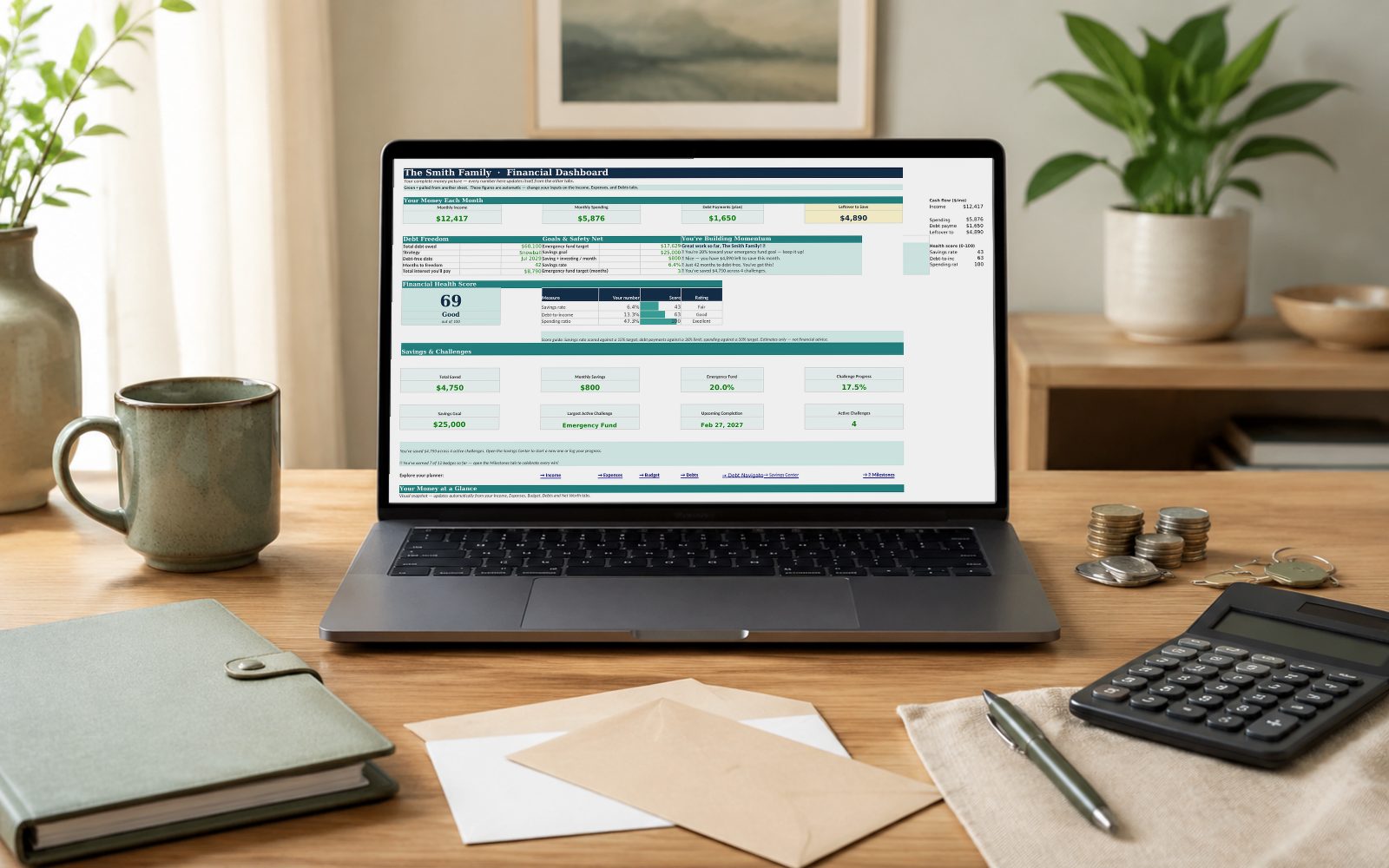
How to Build Your First Budget (Without Hating It)
A budget isn't a punishment — it's a plan for the life you actually want. Here's how to build one you'll still be using in six months.
Published January 12, 2026 · Updated May 1, 2026
Why most budgets fail in week three
Most first budgets fail for the same reason most diets do: they're built for a fantasy version of you. The version who never grabs takeout, never forgets an annual subscription, and never has a car repair. When reality shows up, the budget breaks — and most people conclude they're bad at budgeting, when really the budget was bad at them.
A durable budget starts from your real spending, not your ideal spending. That means the first step isn't cutting anything. It's looking.
Step one: find your real numbers
Pull up the last two months of bank and card statements and sort your spending into three simple piles: fixed bills (rent, insurance, subscriptions), flexible spending (groceries, gas, fun), and irregular expenses (car registration, gifts, repairs).
That third pile is the one that kills budgets. Irregular expenses aren't surprises — they're just infrequent. Averaging them into a monthly amount is the single biggest upgrade you can make to a first budget.
- Fixed bills: the same every month — easy to list.
- Flexible spending: your averages over the last 60 days, not your hopes.
- Irregular expenses: annual total ÷ 12 = the monthly amount to set aside.
Step two: give every dollar one job
With your real numbers in hand, assign your monthly income across the three piles plus one more: goals — debt payoff, emergency fund, investing. If the math comes up negative, don't panic; you've just found the honest starting point most people never see.
Adjust flexible categories first, but be humane about it. A grocery cut of 15% survives; a cut of 50% doesn't. The budget that works is the one you can repeat.
Step three: the ten-minute weekly check-in
A budget isn't a document, it's a habit. Once a week, take ten minutes: enter your spending, glance at what's left in each category, and make one small adjustment if something's drifting. That's the entire practice.
People who do a weekly check-in overwhelmingly keep budgeting; people who 'set and forget' overwhelmingly don't. The check-in is the budget.
Key takeaways
- Build from your real spending averages, not aspirational numbers
- Convert irregular annual expenses into monthly set-asides
- A 10-minute weekly check-in matters more than the perfect system
- Cut gently — the sustainable budget beats the impressive one